2026 Top Oxygen Concentrators for Home and Travel Use Guide?
When it comes to maintaining respiratory health, an Oxygen Concentrator is essential. This device plays a crucial role for many people, providing a reliable supply of oxygen. As we look ahead to 2026, the options available for home and travel use continue to expand. It can be overwhelming to choose the right one.
Selecting an Oxygen Concentrator isn't just about the features. It's about understanding personal needs. Some may require portability for travel, while others need a reliable unit for home. Many models boast lightweight designs but lack battery life. This balance is critical and requires careful consideration.
In this guide, we will explore the top Oxygen Concentrators available. Each model has its pros and cons. Some are more effective, while others may fall short. Users must think about their specific situations. Finding the perfect fit can improve daily life significantly.
Top Features to Consider in Oxygen Concentrators for Home Use
When selecting an oxygen concentrator for home use, certain features are essential. Portability is key if you travel often. Look for lightweight models with sturdy handles. Quiet operation is also crucial. A noisy machine can disrupt daily life. Ensure that the device has a sound level suitable for home environments.
Tips: Check battery life before purchase. A longer battery duration is beneficial for travel. Make sure to read user reviews. They provide real-life experiences that can guide your decision.
Another important feature is ease of use. The controls should be intuitive. Complicated settings can be frustrating. Some concentrators offer digital displays. They show oxygen levels clearly, making it easier to monitor your needs. Consider the size; it should fit well in your designated space without being obtrusive.
Tips: Regular maintenance is vital for performance. Clean filters as recommended. Neglecting this can lead to inefficiency. Additionally, think about the warranty. A good warranty can save money in the long run, but check what it covers.
Advantages of Portable Oxygen Concentrators for Travel
Portable oxygen concentrators (POCs) are increasingly popular for both home and travel use. They provide essential oxygen therapy to those with respiratory issues. A recent report indicated that the global market for POCs is expected to exceed $3 billion by 2026. This growth reflects their importance in improving patients' quality of life.
When considering travel, POCs offer significant advantages. They are lightweight and designed for mobility. Many models weigh under five pounds. This makes them ideal for air travel or road trips. Users can often bring them aboard airlines and use them during flights. This accessibility helps maintain respiratory health while exploring new places.
For travelers, here are some tips: always check airline policies regarding POCs ahead of time. It's also wise to ensure a fully charged battery during travel. Some models include a car charger, which can be handy. Maintaining a checklist to prepare for travel can ease the journey. Remember, while POCs are beneficial, they require regular maintenance and can sometimes malfunction. It's crucial to be aware of this for uninterrupted use.
2026 Top Oxygen Concentrators for Home and Travel Use Guide
| Model |
Weight (lbs) |
Battery Life (hours) |
Flow Rate (L/min) |
Noise Level (dB) |
Price ($) |
| Model A |
5 |
4 |
2 |
40 |
1200 |
| Model B |
6.5 |
6 |
3 |
38 |
1500 |
| Model C |
4.2 |
5 |
2.5 |
42 |
1100 |
| Model D |
7.2 |
8 |
4 |
36 |
1800 |
Comparison of Popular Oxygen Concentrator Brands in 2026
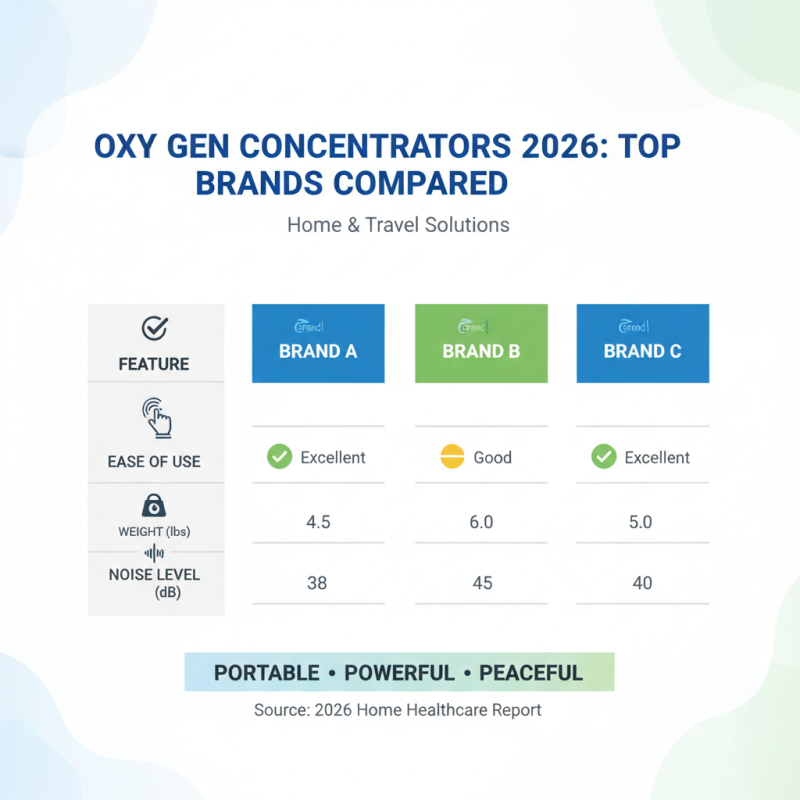
When comparing popular oxygen concentrator brands in 2026, multiple factors come into play. Ease of use, weight, and noise levels are crucial. Recent industry reports indicate that growth in home healthcare has spurred demand for portable solutions. Many users seek models that can serve both home and travel needs without compromising on performance.
Tips: Always check the noise level. A quieter machine improves comfort during use. Look for models under 40 decibels for an enjoyable experience. Weight also matters for mobile users; less than 5 kilograms is ideal for traveling.
Consumer feedback suggests that maintenance can be a challenge. Regular filter changes and cleaning are often overlooked. Many users realize too late that neglecting maintenance affects oxygen delivery. Consider brands that offer clear guidance and support for maintenance.
As you explore options, focus on battery life if you travel often. Some devices boast a 10-hour battery, while others may only last a few hours. Be aware of how long you might need a portable concentrator during outings.
Maintenance and Care Tips for Your Oxygen Concentrator
Maintaining your oxygen concentrator is crucial for its optimal performance. Regular cleaning is necessary. Every week, remove the filters and wash them gently. Ensure they dry completely before reinstallation. Dust and dirt can block airflow, affecting efficiency. Always check the device for any unusual noises. A strange sound might indicate a problem that needs attention.
In addition, monitor the device for any signs of wear. If you notice any cracks or damage, it could lead to bigger issues. Keep the concentrator in a dry and clean environment. Humidity can adversely affect the electronics inside.
Unexpected shutdowns can happen. Imagine having your concentrator turn off while in use. It’s essential to have a backup plan ready. Always have an extra battery charged and accessible. This practice will provide peace of mind during travels or at home. Taking these small but significant steps can ensure your oxygen concentrator serves you well.
2026 Top Oxygen Concentrators Usage Comparison
This chart illustrates the usage statistics of top oxygen concentrators, comparing aspects such as daily usage, battery life, weight, noise level, and maximum flow rate. These metrics are crucial for individuals considering both home and travel use.
Regulations and Safety Standards for Oxygen Concentrators
When selecting an oxygen concentrator for home or travel use, understanding regulations and safety standards is crucial. These guidelines ensure the devices are safe and effective. Many countries have specific requirements that manufacturers must meet. These might include performance benchmarks and safety certifications. Familiarizing yourself with these standards can help you make informed choices.
Tips: Always check for certifications on your device. Look for clear markings indicating compliance with safety regulations. This can ensure reliable performance.
Oxygen concentrators must undergo rigorous testing. Understanding this process can enhance trust in the product you choose. However, some devices might have slight variances in performance. This is where personal experience becomes vital. Monitor how well the unit meets your specific needs.
Tips: Keep a log of your experiences with the device. This can provide insights into its functionality and comfort level. It may also help identify if adjustments are needed.