Leave Your Message

How to Choose the Best Patient Monitor for Your Medical Facility

Choosing the right Patient Monitor is crucial for any medical facility. Dr. Emily Carter, a renowned expert in patient care technology, emphasizes, “The right monitor saves lives.” This statement underlines the importance of making informed decisions.

Patient Monitors vary widely in features and capabilities. Some provide basic vital signs, while others offer advanced analytics and connectivity options. Selecting one can be daunting. Facilities must assess their specific needs. Factors like patient volume, monitoring requirements, and budget are key.

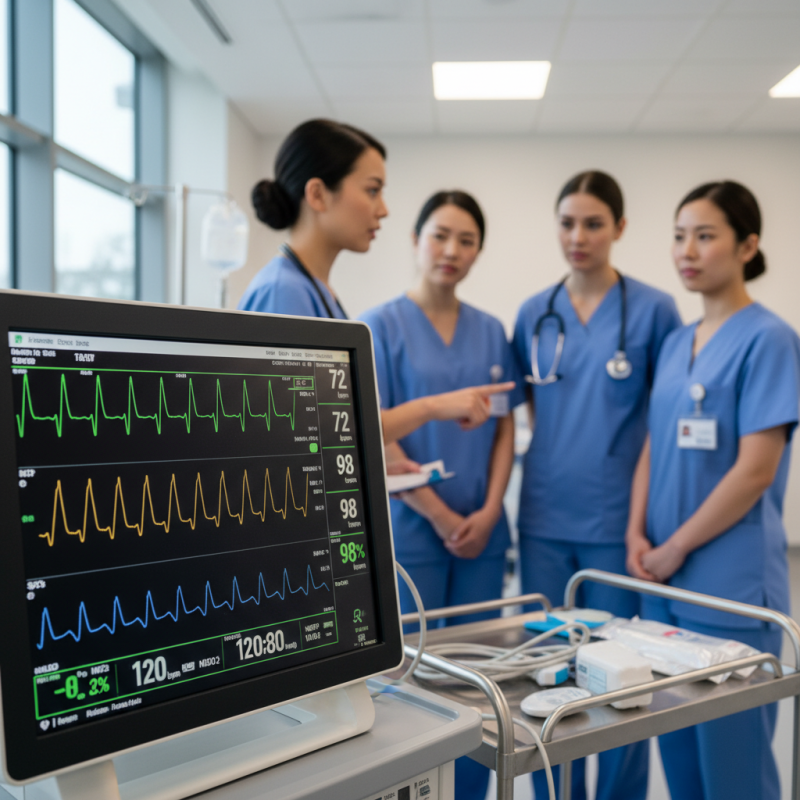
Many facilities overlook the importance of training staff on new Patient Monitors. Even with the best equipment, without proper knowledge, outcomes can suffer. It’s vital to not only consider the monitor’s features but also the support and education necessary for effective use. A great Patient Monitor is only as effective as the team operating it.
How to Choose the Best Patient Monitor for Your Medical Facility

Understanding the Different Types of Patient Monitors Available

How to Choose the Best Patient Monitor for Your Medical Facility

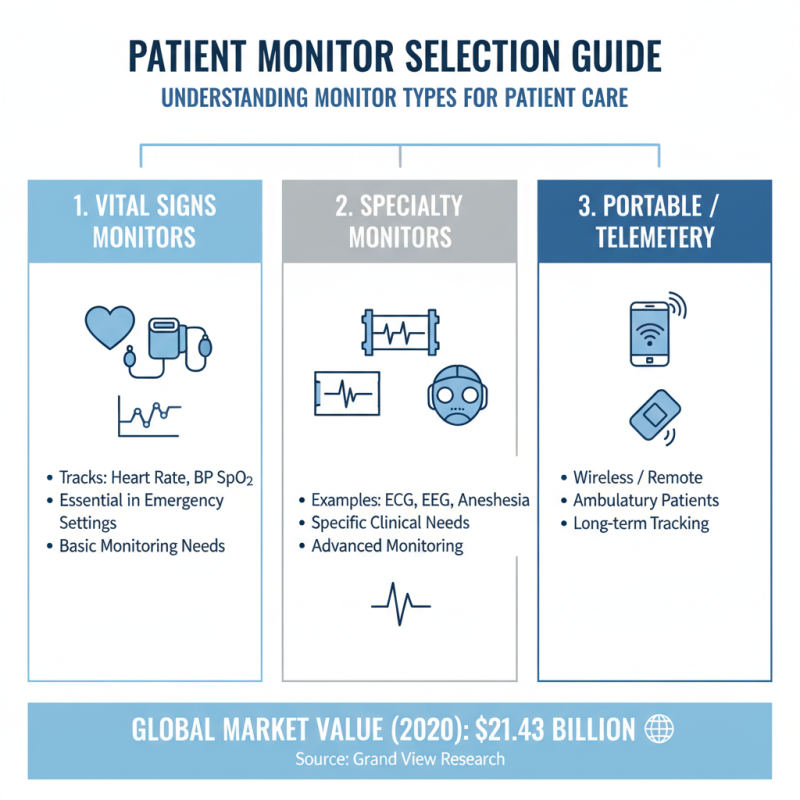
When selecting a patient monitor, it’s vital to understand the different types available. There are multiple categories. Each one serves a specific need in patient care. For instance, vital signs monitors track heart rate, blood pressure, and oxygen saturation. These monitors are essential in emergency settings. According to a market research report from Grand View Research, the global patient monitoring equipment market was valued at $21.43 billion in 2020.

Another category is multi-parameter monitors. These devices offer advanced functionality, integrating various measurements in one unit. They often include features for ECG, temperature, and respiratory rate. A 2021 survey indicated that about 40% of hospitals prefer multi-parameter devices due to their versatility. However, this expansion in features can lead to user errors. Training is crucial to avoid complications.

Additionally, portable monitors gain popularity for in-home care and telemedicine. They're easy to use and can transmit data remotely. The flexibility they provide is appealing, especially in the wake of the pandemic. Yet, their reliability is often questioned. Regular calibration is necessary to ensure accuracy. In some cases, patients may not have access to stable internet, hindering their effectiveness. Such limitations should not be overlooked when choosing equipment for your facility.

Key Features to Consider When Selecting a Patient Monitor

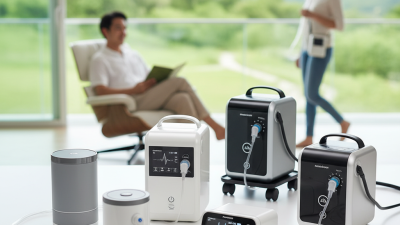
Choosing the right patient monitor for your medical facility can be daunting. Several key features should guide your decision. Start by evaluating the monitor's display clarity. A clear screen aids in quick information processing. Color-coded alerts also enhance readability. Look for monitors that offer customizable settings. Flexibility can ensure better usability for different medical conditions.

Another vital feature is connectivity. The best monitors can integrate with hospital information systems. This allows for streamlined data sharing and patient tracking. Battery life is equally important. A long-lasting battery can prevent interruptions during critical moments. Consider the patient demographics as well. Monitors should accommodate various ages and sizes.

It’s also essential to reflect on training needs. Staff may require time to get accustomed to new technology. Investing in user-friendly devices can mitigate this issue. Lastly, think about maintenance requirements. Frequent servicing can disrupt workflow. Balancing functionality and reliability is key in your selection process.

Assessing the Monitoring Needs of Your Medical Facility

Choosing the right patient monitor for a medical facility starts with understanding your specific monitoring needs. Every unit has different requirements. Consider the types of patients you serve. Are they surgical, critically ill, or in rehabilitation? Each group will need tailored monitoring solutions.

Assess the parameters you need. Basic vital signs like heart rate and blood pressure are essential. However, if you work with intensive care patients, additional features are necessary. Multi-parameter monitors can track breathing, oxygen levels, and even cardiac rhythms. Think about how data will be displayed and analyzed. Clear visuals can significantly impact patient outcomes.

Tip: Involve your clinical team in the selection process. Their insights on daily operations are invaluable. They understand the workflow and can highlight what is truly essential.

Not every monitor will fit every situation. Some may have features you don’t need or might complicate usage. Test the equipment in real-life scenarios to gauge usability. Additionally, don’t underestimate the importance of staff training. A well-trained team can avert potential mishaps.

Tip: Frequent feedback sessions with the staff can reveal shortcomings in your current monitoring setup. Use this feedback to improve choices in the future.

Evaluating Compatibility with Existing Medical Equipment

When choosing a patient monitor, compatibility with existing equipment is crucial. Different machines and technologies may not work well together. For instance, different communication protocols can hinder data sharing. This incompatibility may lead to delays in patient care. It's essential to assess the current technology landscape in your facility.

Consider the interfaces used by your existing monitors. Many facilities have a mix of older and newer systems. This can introduce challenges. Ensuring that new monitors can communicate seamlessly with legacy devices is vital. You might need to invest in adapters or dedicated software. These additional costs can add up quickly.

Evaluating integration capabilities is not always straightforward. Some monitors claim they are compatible, but real-world performance can differ. Testing with your existing system helps validate claims. Observing how new devices integrate into your workflow also uncovers potential issues. This can prevent frustration and unnecessary complications later.

How to Choose the Best Patient Monitor for Your Medical Facility - Evaluating Compatibility with Existing Medical Equipment

Feature Description Compatibility Considerations
Display Size The size of the monitor screen can affect readability and usability. Ensure it fits with existing workstations and viewing angles.
Vital Sign Monitoring Monitors should track heart rate, blood pressure, oxygen saturation, and temperature. Check for compatibility with existing probes and sensors.
Data Connectivity Monitors should support wireless or wired data transmission. Verify with electronic health record (EHR) systems used in the facility.
Battery Life The duration for which the monitor can operate on battery. Ensure it meets operational demands for transport and critical care.
User Interface Ease of use for healthcare professionals. Consider training needs and staff familiarity with the interface.

Budgeting and Cost Considerations for Patient Monitors

How to Choose the Best Patient Monitor for Your Medical Facility

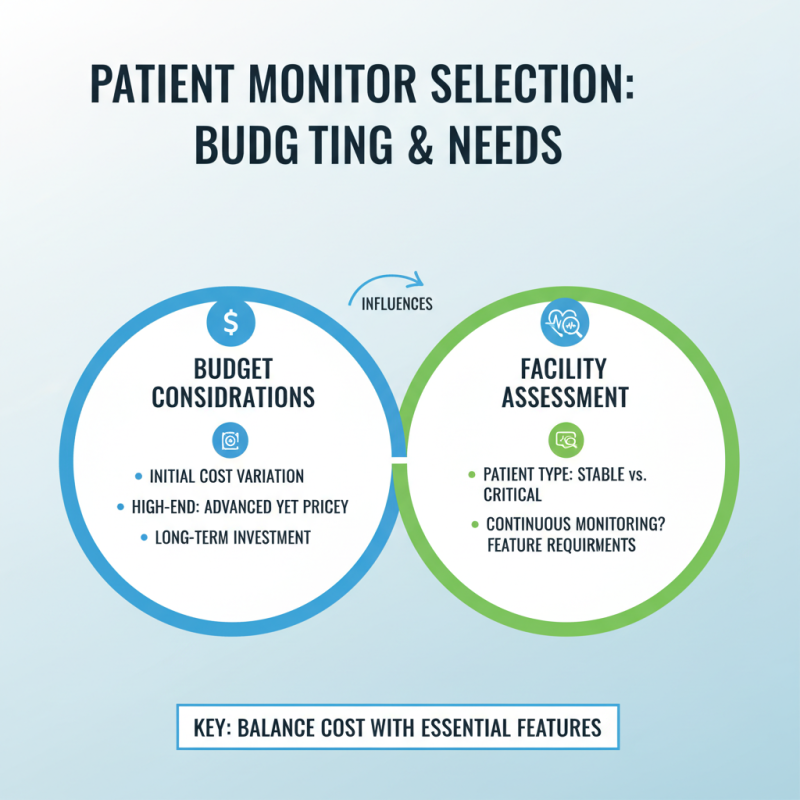
When selecting a patient monitor, budgeting plays a crucial role. The initial cost can vary significantly. While high-quality monitors may offer advanced features, they come with a steep price tag. It's essential to evaluate your facility's specific needs. Consider the types of patients you typically monitor. Are they primarily stable, or do they require continuous oversight? Your answer can impact your investment.

Maintenance and training costs also add up. Regular servicing is necessary for accurate readings. Ensure your staff is adequately trained to use the equipment. These ongoing expenses can sneak into your budget unexpectedly. You might find that a more sophisticated system, while initially costly, reduces long-term costs through its reliability and low failure rates.

Another factor is the return on investment. Cheaper monitors might save money upfront but could lead to higher costs later. Think about potential malfunctions or inaccurate data. They could compromise patient care, leading to serious implications. Weigh all these aspects carefully to make a well-rounded decision. Budgeting for patient monitors requires foresight and a clear understanding of your facility's needs.