Top 10 Patient Monitor Types for Efficient Healthcare Monitoring?
In today's healthcare landscape, effective monitoring of patients is crucial. A reliable Patient Monitor system can make a significant difference. These devices provide real-time data, enabling healthcare professionals to make informed decisions. They measure vital signs such as heart rate, blood pressure, and oxygen saturation.
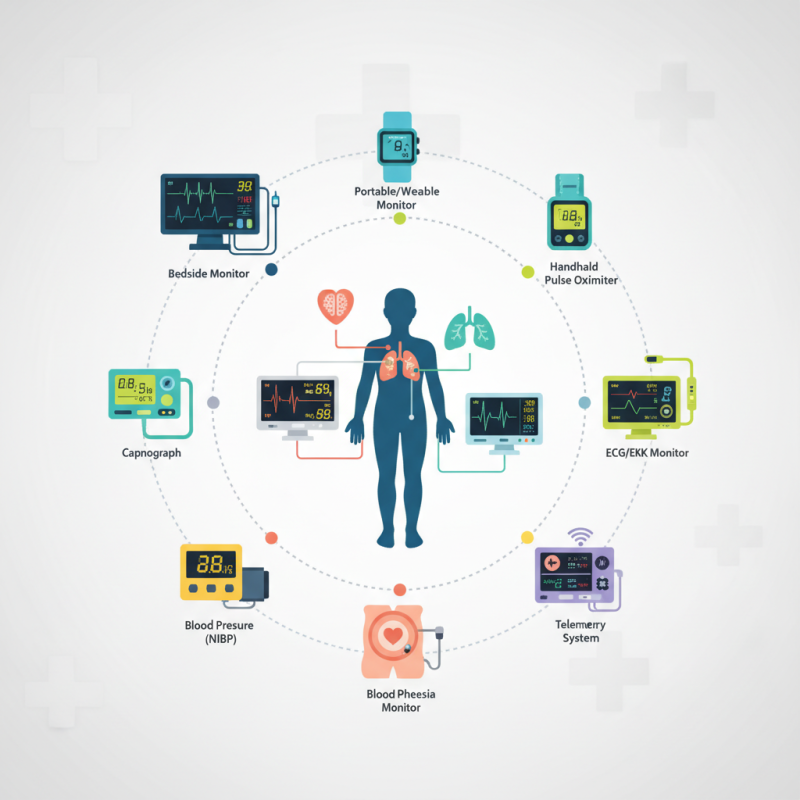
Selecting the right type of Patient Monitor can be overwhelming. Many options exist, each designed for specific scenarios and patient needs. For example, bedside monitors are common in critical care units. Portable monitors serve patients on the move. A mismatch can lead to ineffective monitoring and patient safety risks.
Moreover, technology is advancing rapidly in this field. While some devices offer innovative features, they may come with a steep learning curve. Understanding the trade-offs is essential. Which monitors enhance patient care while being user-friendly? Recognizing these challenges will pave the way for better healthcare outcomes.
Overview of Patient Monitoring Systems in Healthcare Settings
Patient monitoring systems play a crucial role in healthcare. These systems allow healthcare providers to track patients' vital signs and overall status. Many types exist, each serving unique needs. They range from simple devices to complex systems integrating advanced technology.
In today's hospitals, continuous monitoring is essential. Patients in critical care need real-time data. Even slight changes in metrics can indicate serious issues. For instance, a sudden drop in heart rate could signal distress. It's vital to have swift communication among caregivers.
Tips: When choosing a monitoring system, assess compatibility with existing equipment. Training healthcare staff thoroughly improves effectiveness. Not all systems fit every unit, so evaluate specific needs. Monitoring technology can sometimes feel overwhelming. Regular feedback from staff can help refine usage and improve patient outcomes.
Healthcare facilities often face challenges with technology integration. Some systems may not communicate well with others. This gap can lead to mistakes in patient care. Continuous training and updates are key to bridging these gaps. Engaging healthcare professionals in discussions about technology can enhance overall effectiveness. Proper implementation is a process that requires patience and adaptation.
Key Features to Look for in Patient Monitors
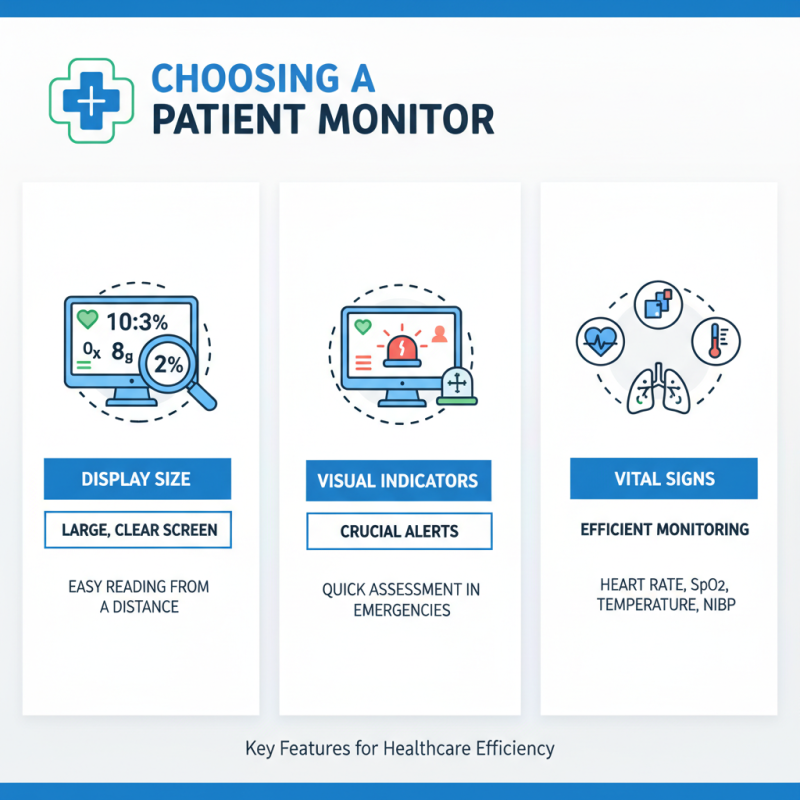
In healthcare, patient monitors play a critical role in ensuring efficient monitoring of vital signs. When choosing a monitor, several key features are essential. First, the display size matters. A clear, large screen allows for easy reading from a distance. It helps nurses and doctors quickly assess a patient’s condition. Clear visual indicators are crucial, especially in emergency situations.
Another important feature is alarm functionality. Monitors should have customizable alerts for different parameters. This ensures that caregivers are notified promptly about any critical changes. Additionally, connectivity options are vital. Modern monitors can send data directly to electronic health records, streamlining communication between staff.
However, not all monitors are user-friendly. Some may have complicated interfaces, leading to potential misuse. Training staff is necessary but can often be overlooked. Consider the battery life as well. A monitor with short battery duration may fail in crucial moments. Every aspect of a patient monitor has to be reliable. Each feature can significantly impact patient care. Reflection on these elements is essential for improving monitoring practices.
Advancements in Patient Monitoring Technology
Advancements in patient monitoring technology have transformed healthcare. Modern monitors offer real-time data, enhancing patient safety and care. These devices track vital signs continuously. They alert healthcare providers to any potential issues. This immediate feedback can be lifesaving in critical situations.
Wearable monitors are gaining popularity. They allow patients to move freely while being monitored. These devices can track heart rate, oxygen levels, and more. However, accuracy can sometimes be questionable, leading to concerns. Regular calibration and checks are necessary to ensure reliability. Some patients may feel overwhelmed by the technology. Training is crucial to help them understand their devices better.
Telehealth is another area benefiting from advancements. Remote monitoring allows doctors to observe patients from afar. This approach helps in managing chronic conditions more effectively. Yet, technical glitches can hinder communication. Ensuring a robust internet connection is essential. Furthermore, data privacy remains a significant concern. Balancing innovation with security is vital for future progress.
Top 10 Patient Monitor Types for Efficient Healthcare Monitoring
This chart illustrates the top 10 types of patient monitors used in healthcare, showcasing their popularity based on the percentage of usage in medical facilities.
Challenges and Considerations in Patient Monitoring Implementation
Implementing patient monitoring systems is fraught with challenges. Integration with existing hospital infrastructure remains a key hurdle. Many hospitals still operate with outdated systems. According to a report by Research and Markets, over 40% of healthcare providers struggle with interoperability issues. These barriers can lead to critical data gaps. When data is not seamlessly shared, real-time monitoring suffers.
Training staff effectively is another significant concern. Healthcare workers often feel overwhelmed by new technology. A survey in the Journal of Medical Systems revealed that nearly 30% of clinicians received insufficient training on monitoring devices. As a result, mistakes can happen. Timely responses to patient needs may be delayed, increasing health risks. User-friendly interfaces are essential, yet not all devices prioritize this aspect.
Budget constraints also play a role in monitoring implementation. Many facilities operate with tight financial resources. A study by the American Hospital Association found that nearly 25% of hospitals face budget shortfalls. Premium monitoring systems may be out of reach. This leads to compromises in patient care. Facilities may opt for inferior technologies, risking patient outcomes. Balancing cost and quality is an ongoing dilemma.