Best Blood Pressure Monitor for Home Use 2026?
In today's fast-paced world, monitoring health at home has become essential. The importance of a reliable Blood Pressure Monitor cannot be overstated. Dr. Sarah Jensen, a leading cardiologist, emphasizes, "A home monitor is crucial for maintaining heart health." This statement underlines the growing necessity for effective health tools.
Selecting the best Blood Pressure Monitor can be overwhelming. Numerous brands and models flood the market, each promising accuracy and reliability. However, it's vital to consider personal needs and preferences. Not every monitor suits every individual. Some may struggle with complex devices or small buttons, leading to frustration and inaccurate readings.
Investing in a Blood Pressure Monitor is not just about convenience. It's about empowering ourselves to take charge of our health. Too often, people overlook their blood pressure until it's too late. Home monitoring provides an opportunity for reflection. Are we truly aware of our health status? Choosing the right device encourages proactive health management and peace of mind.
Top Features to Consider When Choosing a Blood Pressure Monitor
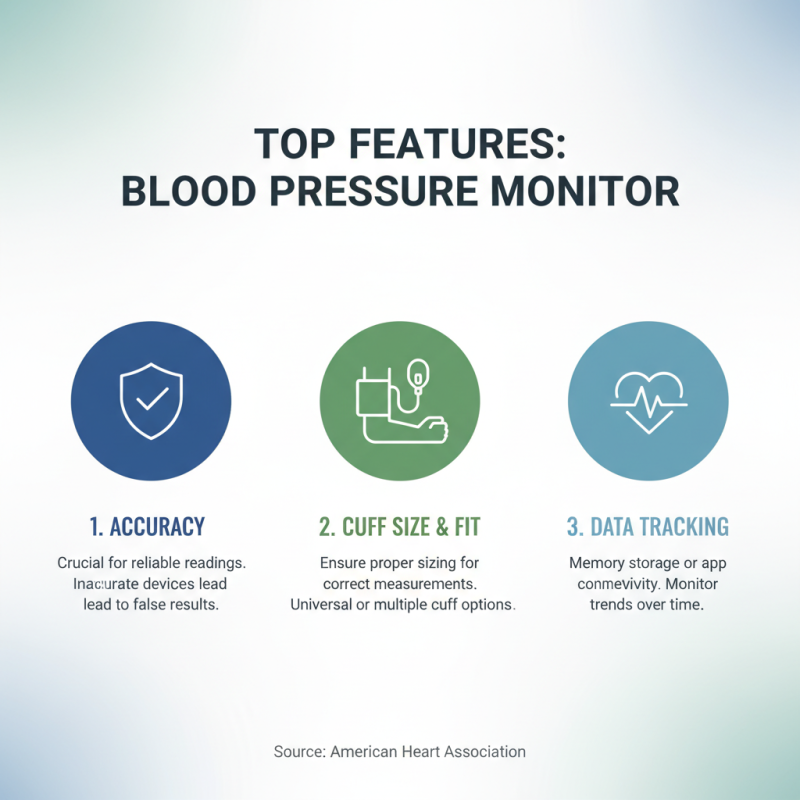
When choosing a blood pressure monitor for home use, several key features are essential. Accuracy is paramount. A study by the American Heart Association indicates that inaccurate devices can lead to false readings. This can result in unnecessary anxiety or missed diagnoses.
User-friendliness is also crucial. Look for monitors that are easy to set up. Intuitive interfaces make a difference, especially for those who aren’t tech-savvy. Many models include larger displays for easier reading. Furthermore, portability is beneficial for regular monitoring. Lightweight devices fit comfortably in a bag.
Data storage is another important feature. Some monitors can store multiple readings, providing a clearer view of blood pressure trends. This functionality is vital, as understanding your measurements over time can highlight health concerns. However, it’s worth noting that technology isn't perfect. Regular calibration is necessary to maintain accuracy. Consider how often you will need to adjust your device to ensure it remains reliable.
Types of Blood Pressure Monitors: Automatic vs. Manual
When choosing a blood pressure monitor, you will encounter two main types: automatic and manual. Automatic monitors are user-friendly. They inflate the cuff and display results with a push of a button. This ease of use is appealing, especially for older adults. Many prefer this method for its convenience. However, some users may find these devices too reliant on technology.
Manual monitors require more involvement. They use a stethoscope and a hand pump. This method demands skill and focus. Users must listen closely for heartbeats. While some appreciate the traditional approach, it can lead to errors. Practicing is necessary for accuracy. Moreover, not everyone has the time or patience to master this technique.
Consider your lifestyle and comfort level. An automatic monitor might serve you better if you seek simplicity. Alternatively, if you enjoy hands-on tasks, a manual monitor could fit your preferences. Both types have their pros and cons. Evaluating your needs is key to making an informed decision.
Best Blood Pressure Monitor for Home Use 2026
| Type |
Accuracy |
Ease of Use |
Price Range |
Recommended For |
| Automatic |
High (±3 mmHg) |
Very Easy |
$30 - $100 |
General use |
| Manual |
High (±5 mmHg) |
Moderate |
$20 - $50 |
Clinics, Hospitals |
| Smart |
High (±3 mmHg) |
Very Easy |
$50 - $150 |
Tech-savvy users |
How to Measure Blood Pressure Accurately at Home
Measuring blood pressure at home can be straightforward but requires careful attention. Accurate readings are essential for effective health monitoring. Studies indicate that about 30% of adults suffer from hypertension. Yet, many do not recognize the importance of regular monitoring. Home devices can bridge this gap, but they must be used correctly.
Positioning is crucial. Sit comfortably with your back supported. Feet should be flat on the ground. Your arm must be at heart level, and the cuff should fit snugly around your upper arm. According to the American Heart Association, incorrect cuff size can lead to a 10-40 mmHg error in readings. Many people forget to rest for at least five minutes before taking measurements. This oversight can skew results.
It’s also important to take multiple readings. Medically advised practices suggest measuring blood pressure twice, one minute apart, to ensure consistency. Yet, many users only take one reading and assume it’s accurate. This may lead to unnecessary anxiety or mismanagement of health conditions. Remember, proper technique is vital for reliable results and better health management.
Blood Pressure Readings Over a Week
This chart displays the systolic and diastolic blood pressure readings over a week. Keeping track of these values can help monitor your heart health and identify any patterns or irregularities.
Best Blood Pressure Monitors for Different Budgets in 2026
When choosing a blood pressure monitor for home use, budget matters a lot. Many options cater to different needs and financial limits. If you're looking for something basic, there are affordable models that are quite reliable. These devices often have a simple design and clear displays. However, users might find them lacking in advanced features like Bluetooth connectivity or data tracking.
For those willing to invest more, there are mid-range monitors that offer additional functions. They might include multiple user profiles and enhanced memory storage for past readings. These features can help users track their health over time. Yet, some users still struggle with interpreting the data. It's important to remember that technology should simplify our lives, not complicate them.
Premium models are available for users who want everything. They often provide precise readings and advanced analytics. However, they can be overwhelming and complex. Not everyone needs all those features, and it can feel excessive. It's essential to reflect on what you truly need, so you don't overspend on unneeded functionalities. The best choice is one that meets your specific needs without unnecessary extras.
User Reviews and Recommendations for Top Blood Pressure Monitors
When looking for the best blood pressure monitor for home use, user reviews can be incredibly helpful. Many customers emphasize the importance of accuracy in their devices. It's vital that the readings reflect true blood pressure levels. Some monitors are praised for their ease of use. People appreciate features like large displays and simple interfaces.
However, not all monitors are perfect. Some users report inconsistencies in readings. It seems that calibration can be an issue. Others find the size of the cuff uncomfortable. The right cuff size is crucial for accurate readings. Many shoppers emphasize the need for a snug fit.
Features matter as well. Advanced devices offer connectivity to apps. This can help track blood pressure over time. Users enjoy the ability to store data for future reference. Yet, some reports note that technology can be overwhelming. Simplicity often leads to better user experiences. Therefore, taking time to find the right model is essential. It's worth considering user feedback carefully.