Top 10 Central Monitor System Solutions for Global Buyers?
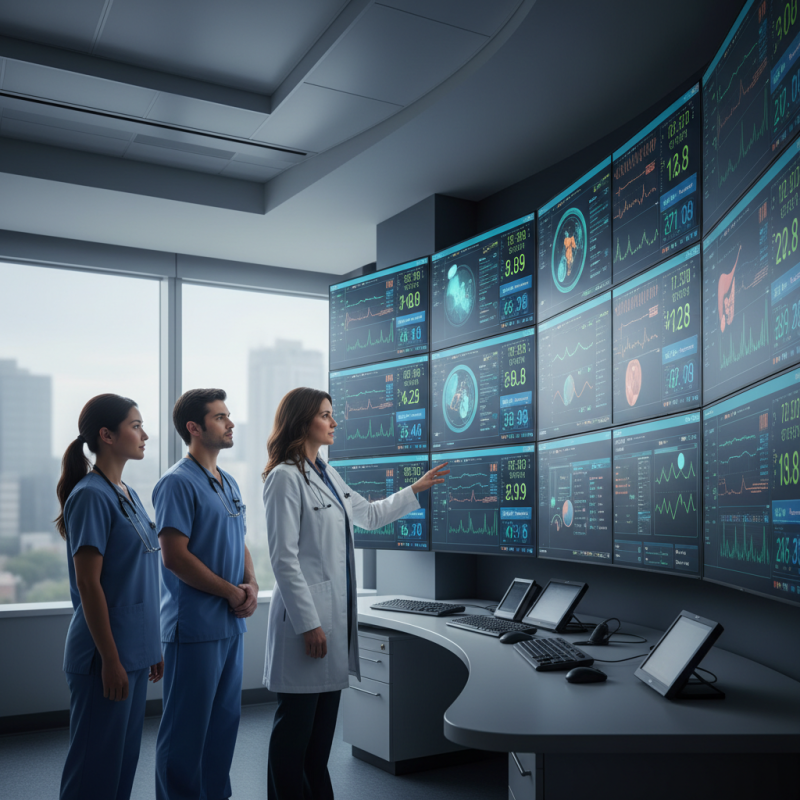
In today's healthcare landscape, the efficiency and reliability of a Central Monitor System are paramount. Dr. Emily Hartman, a leading expert in medical technology, emphasized, "A robust Central Monitor System is essential for real-time patient care." As global buyers seek optimal solutions, understanding the nuances of these systems becomes crucial.
Central Monitor Systems play a vital role in patient monitoring. They facilitate timely data access, ensuring healthcare providers can respond swiftly. Yet, buying the right system often poses a challenge. Many companies offer varying features, making comparisons difficult. It’s essential to consider what fit best meets specific needs.
Alongside technical capabilities, factors like ease of use and integration should be examined. Some systems may promise the world but fail in practical scenarios. A system’s reliability can make all the difference in patient outcomes. As buyers embark on this journey, taking time to reflect on their requirements will lead to better decisions.
Overview of Central Monitor System Solutions for Global Buyers
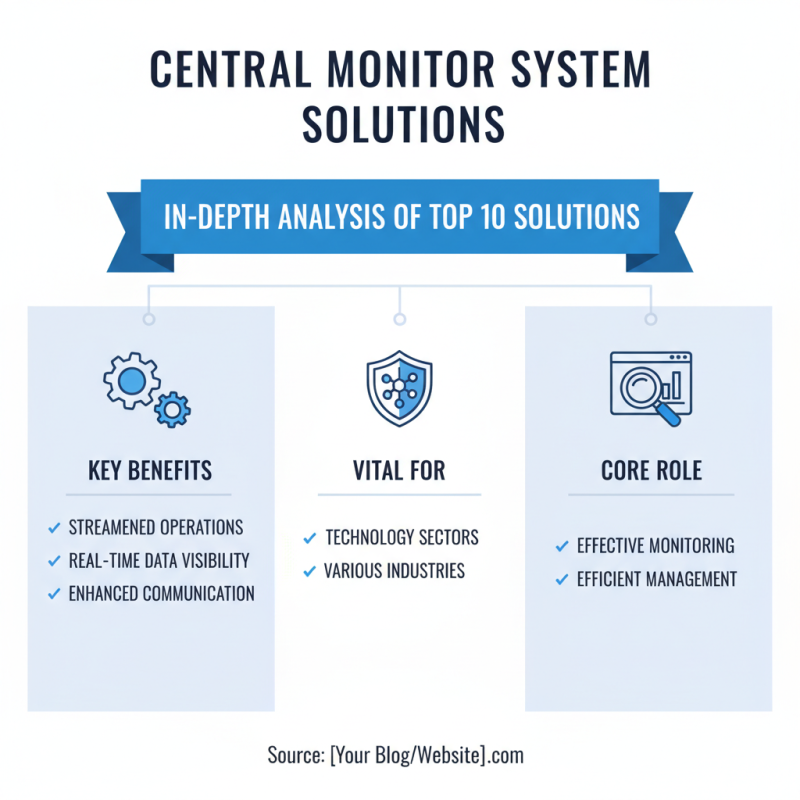
Central Monitor Systems (CMS) have become essential for various industries worldwide. These systems enable real-time monitoring of critical parameters, boosting operational efficiency. According to a recent industry report, the global CMS market is projected to grow at a CAGR of 12% between 2023 and 2030. This growth is attributed to the increasing demand for automation and data analytics in sectors such as healthcare, manufacturing, and energy.
The implementation of a CMS can significantly enhance decision-making processes. Real-time data alerts improve responsiveness to potential issues. However, organizations often face challenges in system integration and data management. A survey indicated that 45% of businesses struggle with software compatibility. Employing a robust solution can mitigate these pitfalls. Companies must analyze their unique needs before investing in CMS technology.
Moreover, training staff to effectively utilize these systems is crucial. A report from an industry expert noted that over 30% of users underutilize CMS features. This underuse leads to missed opportunities for optimization. By fostering a culture of continuous learning, organizations can harness the full potential of their CMS solutions. Balancing technology with human expertise ensures that the systems serve their intended purpose effectively.
Criteria for Selecting the Best Central Monitor System
When selecting a central monitor system, buyers need to focus on functionality. Usability is key; systems should be intuitive and easy to navigate. Reports indicate that 70% of users prefer interfaces that require minimal training. A complex system can lead to errors and decreased efficiency.
Scalability is another critical factor. As healthcare facilities grow, their monitoring needs evolve. A system must adapt to changes in infrastructure. A study noted that adaptable systems can reduce costs by up to 30% over time. Further, integration with existing technologies enhances workflow, another aspect that shouldn’t be overlooked.
Support and reliability also matter significantly. Continuous support ensures smooth operations. According to industry surveys, users report that reliable systems reduce downtime by nearly 40%. Choosing a provider known for robust customer service can mitigate potential issues. In an age of rapid technological advancement, it's essential to seek a partner that evolves alongside your needs.
Top 10 Central Monitor System Solutions
This bar chart represents the importance scores of various criteria when selecting a central monitor system. The scores range from 1 to 10, indicating how essential each factor is for global buyers. Scalability and security are highlighted as the most critical aspects, while cost and integration have slightly lower importance.
Top Features and Benefits of Leading Central Monitor Systems
Central monitor systems play a crucial role in managing and overseeing various operations in industries worldwide. One key feature is real-time data monitoring. This allows users to access up-to-date information, enabling quick decision-making. Monitoring essential metrics can lead to enhanced performance and efficiency.
Another vital benefit is the centralized control. With this feature, users can manage multiple devices and systems from one location. Simplifying operations reduces the potential for human error. Additionally, this centralized approach promotes seamless communication between different departments, which can improve overall workflow.
User-friendly interfaces are also critical in these systems. An intuitive design ensures users can easily navigate the software. However, this does not eliminate the need for proper training. Some systems may have complex functionalities, requiring time to master fully. Companies should invest in training to maximize the system's potential. Balancing user experience and functionality remains a challenge.
Top 10 Central Monitor System Solutions for Global Buyers
| Feature |
Benefit |
Compatibility |
User Rating (out of 5) |
| Real-Time Monitoring |
Immediate issue detection |
Windows, Linux |
4.7 |
| Customizable Dashboards |
Tailored user interface |
Web-based |
4.5 |
| Alerts and Notifications |
Proactive problem resolution |
iOS, Android |
4.8 |
| Data Analytics |
Informed decision making |
Windows, Mac |
4.6 |
| Cloud Integration |
Remote access capabilities |
Cloud Services |
4.4 |
| Multi-User Access |
Collaborative working environment |
Windows, Android |
4.5 |
| Security Features |
Data protection and integrity |
All platforms |
4.9 |
| User Training and Support |
Ease of use and troubleshooting |
Online and Offline |
4.6 |
| Regulatory Compliance |
Adherence to industry standards |
Healthcare, Finance |
4.7 |
| Integration with Existing Systems |
Seamless operations |
Various Platforms |
4.5 |
Emerging Trends in Central Monitoring Technologies for Buyers
The landscape of central monitoring technologies is rapidly evolving. Emerging trends indicate a significant shift towards AI-driven solutions. These systems enhance data analytics and provide real-time insights. According to a recent industry report, 75% of healthcare organizations are investing in AI to improve monitoring capabilities. This trend is crucial for proactive patient care.
Interoperability is another significant focus. Many systems now offer seamless integration with existing IT infrastructures. This integration ensures that healthcare providers can access data across various platforms. A survey revealed that 68% of buyers prioritize systems that support interoperability. This need highlights the existing gaps in traditional monitoring solutions.
Data security remains a pressing concern. As monitoring systems collect sensitive information, ensuring its protection is vital. Many users report feeling uncertain about data privacy measures. Balancing functionality with security is a challenge that developers must address. The evolving expectations of buyers demand that solutions are not only effective but also secure. Addressing these areas can lead to more informed purchasing decisions.