Leave Your Message

2026 Best Pulse Oximeter for Global Buyers?

Choosing the 2026 Best Pulse Oximeter for Global Buyers requires more than comparing prices and star ratings. A reliable device should provide consistent oxygen saturation and pulse readings in everyday conditions. It should also perform reasonably well during movement, cold fingers, and lower blood circulation. These details matter in real homes, clinics, travel bags, and workplace first-aid kits.

This guide examines measurement accuracy, sensor design, screen readability, battery life, durability, and user instructions. It also considers testing evidence, manufacturer transparency, and standards such as ISO 80601-2-61. Regional approvals can differ, so buyers should verify local requirements before ordering. A product accepted in one market may not have identical status elsewhere. That point is easy to overlook.

Practical testing offers useful insight. A bright screen helps in a dark bedroom, while a sturdy clip feels safer on a busy ward. Yet no consumer device is perfect. Readings can change with nail polish, hand movement, cold skin, or poor placement. Some brands explain these limits clearly; others do not. That difference deserves attention. This review aims to separate meaningful performance from attractive packaging and unsupported claims. It does not replace medical advice or professional diagnosis. Users with concerning symptoms should seek qualified care, even when the displayed number appears normal. The final choice should balance evidence, usability, local availability, warranty support, and honest expectations. Accuracy matters. So does trust.

2026 Best Pulse Oximeter for Global Buyers?

What Is a Pulse Oximeter and How Does It Work?

2026 Best Pulse Oximeter for Global Buyers?

What Is a Pulse Oximeter and How Does It Work?

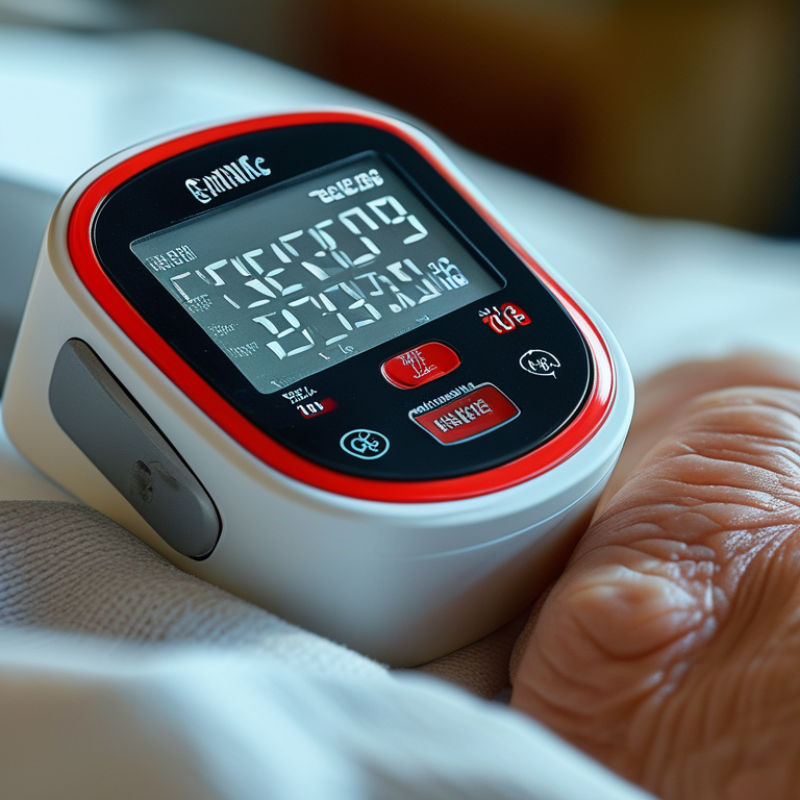
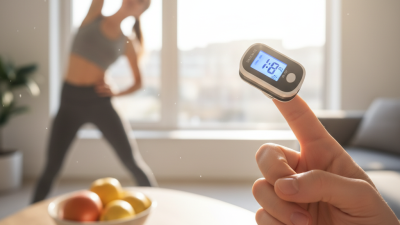
A pulse oximeter is a small, non-invasive device that estimates blood oxygen saturation, called SpO2, and pulse rate. It usually clips onto a fingertip. Inside, red and infrared light pass through the skin. Oxygen-rich and oxygen-poor blood absorb these wavelengths differently. A sensor then calculates an estimated percentage and displays the result within seconds.

The number is useful, but it is not perfect. Movement, cold fingers, dark nail polish, poor circulation, or an incorrect fit may affect accuracy. A steady hand helps. Normal readings can also appear during early illness, so one measurement should not replace medical advice. Buyers should check the device’s stated accuracy, intended use, instructions, and required regulatory approvals for their country. Standards and import rules vary globally. A clinician’s assessment remains more reliable when symptoms are serious.

Tips: Warm your hand before testing, remove nail polish when possible, and wait for a stable reading. Try another finger if the result changes sharply. Keep the hand still and below heart level. Compare repeated readings instead of trusting one number. If a reading stays unusually low, or breathing feels difficult, seek qualified medical care promptly. Some devices display confidence poorly, which is an overlooked weakness. Read the manual carefully.

Key Features to Compare in a 2026 Pulse Oximeter

Choosing a pulse oximeter in 2026 requires more than comparing a low price. The useful question is how it performs during ordinary, imperfect use. Look for clear SpO2 and pulse-rate readings, preferably with adjustable brightness. Large digits help older users and dim bedrooms. A steady waveform can reveal a weak or unstable signal. It should also show a low-perfusion warning or signal-quality indicator. That detail matters when fingers are cold, circulation is reduced, or the user moves slightly. A comfortable spring clip and soft inner surface reduce placement errors. Small design choices count.

Accuracy claims deserve careful checking. Seek independent clinical validation and documentation linked to ISO 80601-2-61, not only promotional language. Results should remain consistent across different skin tones, age groups, and normal movement. No device is perfect. During home checks, cold hands, nail coverings, poor fit, and bright sunlight can distort readings. Try warming the hand, resting for a minute, and repeating the measurement. A reliable model should respond quickly, protect stored data, and use replaceable or rechargeable power safely. Check the alarm volume, automatic shutoff, operating temperature, and screen orientation before purchase. Global buyers should confirm local conformity markings, clear instructions, warranty support, and measurement units. Some low-cost models feel impressive at first but become inconsistent after battery changes. That deserves closer questioning. A pulse oximeter supports observation; it does not diagnose illness. Persistent or unexpected readings require professional medical assessment, especially when symptoms are present.

How to Choose a Pulse Oximeter for Different User Needs

2026 Best Pulse Oximeter for Global Buyers?

Choosing a pulse oximeter should begin with the user, not the display design. For home monitoring, select a device with clear readings, a stable finger clip, and simple instructions. Older adults may need large numbers and strong contrast. Children require a suitable probe size, because loose clips can produce unreliable results. Athletes may prefer compact models, but exercise readings need careful interpretation.

Accuracy matters more than extra features. The U.S. FDA’s February 2021 safety communication identified skin pigmentation, poor circulation, cold fingers, skin temperature, and nail products as factors affecting readings. Therefore, buyers should seek documented testing and compliance with ISO 80601-2-61, the international standard for pulse oximeter performance. A device showing oxygen saturation and pulse rate is often sufficient. Bluetooth is not automatically useful.

The WHO Pulse Oximetry Training Manual advises checking the patient’s condition alongside the reading, rather than trusting one number. Warm the hand, keep still, and wait for a stable signal. Compare repeated readings at similar times. Small details matter. A sudden low result may reflect movement or poor circulation, but it should not be dismissed casually. I would also check warranty terms, battery access, language support, and local after-sales service. Some online specifications look impressive, yet independent validation is difficult to verify. That uncertainty deserves attention before purchase.

Global Safety Standards, Accuracy, and Certification Requirements

2026 Best Pulse Oximeter for Global Buyers?

Global buyers should examine safety evidence before comparing screens, prices, or mobile functions. ISO 80601-2-61 defines performance and testing requirements for pulse oximeters, including accuracy across the 70–100% oxygen saturation range. IEC 60601-1 addresses basic electrical safety and essential performance. These standards support purchasing decisions, but they do not automatically prove clinical suitability.

The FDA’s 2021 Safety Communication warned that pulse oximeter readings may be less accurate under certain conditions, including differences in skin pigmentation, poor circulation, cold fingers, and motion. That warning deserves practical attention. A reading of 92% on a cold fingertip may not tell the whole story. Look for clinical validation documents, the tested population, accuracy claims, and the device’s intended environment. CE marking under the European Medical Device Regulation, UKCA requirements, or other national registrations may apply, depending on the market. Certification is useful. It is not the same as bedside truth.

Tips: Check whether the technical file names ISO 80601-2-61. Ask for accuracy data, not only a certificate number. Test several units against a calibrated simulator during supplier evaluation. Compare readings after warming the finger and removing nail coatings. Record errors at low saturation levels, where performance can become less dependable. WHO technical specifications also emphasize alarms, durability, cleaning, labeling, and user training. Many buyers focus on accuracy alone. That is understandable, but incomplete. A reliable device should remain usable after repeated cleaning, battery changes, and rushed measurements.

2026 Best Pulse Oximeter for Global Buyers? - Global Safety Standards, Accuracy, and Certification Requirements

Evaluation Area Global Benchmark or Requirement What Buyers Should Verify Recommended Acceptance Check
Intended Use A pulse oximeter may be intended for spot checks or continuous monitoring. Professional, home-use, transport, and sports applications have different risk and usability expectations. The labeling must clearly identify the user population, operating environment, measurement purpose, and limitations. Reject products whose intended use is unclear or whose marketing claims exceed the cleared, approved, or registered use.
Core Product Standard ISO 80601-2-61 specifies particular safety and essential-performance requirements for pulse oximeter equipment, including pulse oximeter monitors and probes. A current test report or declaration showing evaluation against the applicable edition of ISO 80601-2-61. Confirm the report covers the exact model, probe type, software version, and intended patient population.
Electrical Safety IEC 60601-1 is the primary general standard for basic safety and essential performance of medical electrical equipment. Electrical safety test report, risk-management documentation, power-supply specifications, and protection against electric shock. Check that the report identifies the finished device and all supplied chargers, adapters, and accessories.
Electromagnetic Compatibility IEC 60601-1-2 addresses electromagnetic disturbances, immunity, and emissions for medical electrical equipment. EMC test results for the intended environment, including home healthcare, professional healthcare, or transport use where applicable. Verify that wireless functions, displays, alarms, and readings remain safe during stated electromagnetic exposure conditions.
SpO₂ Accuracy For many regulatory evaluations, a commonly used performance benchmark is an arterial oxygen saturation accuracy root-mean-square error of no more than 3 percentage points across the claimed 70–100% SpO₂ range. The applicable submission pathway and population determine the final requirement. Clinical or controlled desaturation validation data, sample size, reference method, tested saturation range, and reported accuracy statistic. Do not rely only on a display resolution such as “1%.” Confirm measured accuracy under the intended conditions.
Pulse-Rate Accuracy Pulse-rate accuracy must be validated over the range stated in the product labeling and under relevant motion, perfusion, and rhythm conditions. Declared pulse-rate range, accuracy tolerance, test conditions, and performance near the low-perfusion limit. Compare the stated tolerance with the actual use case rather than selecting only by the widest numerical range.
Low Perfusion and Motion Accuracy can deteriorate with weak pulsatile signals, movement, poor sensor positioning, cold extremities, ambient light, or circulatory problems. Low-perfusion and motion-performance data, signal-quality indicators, and clearly stated operating limitations. Prefer devices that display a signal-quality or pulse-strength indicator and provide clear instructions for invalid readings.
Skin-Tone and Population Validation Validation should represent the intended patient population and should evaluate performance across a broad range of skin pigmentation, especially where the device will be used for clinical decisions. Participant demographics, skin-pigmentation assessment method, subgroup results, and any exclusions or limitations. Treat missing subgroup information as a documentation gap, not as evidence of equivalent performance.
Biocompatibility Patient-contacting materials should be assessed under the ISO 10993 biological-evaluation framework according to the type and duration of contact. Material list, skin-contact duration, biocompatibility evaluation, and information on latex, nickel, adhesives, or other sensitizers. Verify that the tested materials match the production device and replacement accessories.
Risk Management ISO 14971 is widely used for medical-device risk-management processes, including hazard identification, risk control, and post-production monitoring. Risk-management summary covering inaccurate readings, missed alarms, battery failure, software faults, sensor damage, and foreseeable misuse. Confirm that residual risks are reflected in warnings, instructions, alarm behavior, and maintenance requirements.
Usability Engineering IEC 62366-1 addresses usability engineering for medical devices, particularly risks arising from use errors. Usability validation for probe placement, patient movement, low-signal conditions, alarm interpretation, and cleaning procedures. Choose products with readable displays, understandable symbols, and instructions suitable for the target users.
Software and Cybersecurity Network-connected or software-controlled devices may require software lifecycle, cybersecurity, data-protection, and update controls in the destination market. Software version control, update policy, access control, data encryption, vulnerability handling, and compatibility documentation. For Bluetooth or cloud-connected models, verify how patient data is stored, transmitted, deleted, and protected.
United States Medical pulse oximeters generally require the applicable U.S. medical-device market authorization pathway, commonly involving a 510(k) clearance for eligible devices. Establishment registration and device listing obligations may also apply. Clearance number or applicable authorization evidence, intended-use statement, labeling, and exact model identification. Do not treat an electrical safety mark or voluntary laboratory report as a substitute for market authorization.
European Union and EEA Devices placed on the EU market must comply with Regulation (EU) 2017/745 on medical devices. Depending on classification and conformity route, a notified-body assessment may be required before CE marking. EU Declaration of Conformity, CE information, risk classification, technical documentation status, notified-body details where applicable, and economic-operator information. Check that the CE marking relates to the medical-device regulation and not only to general electrical or radio requirements.
United Kingdom Great Britain uses the UK medical-device framework and UKCA route, subject to current transitional arrangements. Northern Ireland may follow EU rules under applicable circumstances. UK Declaration of Conformity, applicable conformity-assessment evidence, registration status, and labeling for the destination territory. Confirm the exact marking and registration route for Great Britain versus Northern Ireland before importation.
Canada Commercial sale of medical devices generally requires the appropriate Canadian medical-device licence or establishment authorization, depending on device class and role in the supply chain. Device licence information, classification, bilingual labeling where required, and importer or distributor compliance documents. Verify the authorization in the official Canadian device database before purchase.
Australia Medical devices generally need inclusion in the Australian Register of Therapeutic Goods before lawful supply, unless an exemption or special pathway applies. Register entry, sponsor details, device description, intended purpose, and conformity-assessment evidence. Ensure the registered model and intended purpose match the product being imported.
Japan Japan regulates medical devices under its pharmaceutical and medical-device framework. Classification determines the applicable certification, approval, or notification route. Japanese-market authorization, local marketing authorization holder information, Japanese labeling, and applicable conformity evidence. Do not assume that approval in another country permits direct sale in Japan.
China China requires medical-device registration or filing according to device classification and applicable domestic requirements. Registration or filing documentation, Chinese labeling, product technical requirements, and local responsible-party information. Confirm that the registration covers the exact product configuration and intended use.
Packaging and Labeling Labels should identify the device, manufacturer or responsible economic operator, model, lot or serial number, power requirements, warnings, symbols, and applicable regulatory marks. Artwork approval, language versions, UDI or traceability information where required, and instructions for use. Check that packaging, device markings, user manual, and regulatory records contain consistent model and intended-use information.
Calibration and Quality Control Routine calibration and production verification should be controlled through a documented quality system. ISO 13485 is widely used for medical-device quality-management systems, although market-specific legal requirements differ. Quality certificate scope, calibration procedure, incoming inspection records, final-test criteria, and change-control process. Request lot-level test records and a defined acceptance sampling plan for delivered units.
Battery and Environmental Performance Battery life, operating temperature, humidity, altitude, ingress protection, storage conditions, and cleaning compatibility must be stated and validated for the intended use. Battery specification, low-battery behavior, environmental test data, cleaning instructions, and transport or storage limits. Confirm that readings remain within specifications throughout the declared battery and environmental conditions.
Buyer Decision Rule The best global option is not necessarily the device with the lowest price or highest displayed specification; it is the model with documented accuracy, appropriate intended use, verified market authorization, and reliable support. Complete technical file summary, destination-market authorization, independent test evidence, warranty, spare probes, software support, and complaint-handling process. Approve only when performance evidence, regulatory status, labeling, supply continuity, and after-sales responsibilities are all documented.

Note: Regulatory requirements vary by intended use, device classification, product configuration, and destination market. Buyers should verify current requirements with the competent authority or an authorized regulatory professional before importation or commercial distribution.

How to Use, Maintain, and Evaluate a Pulse Oximeter Properly

A pulse oximeter estimates blood oxygen saturation and pulse rate through a fingertip. Use it when your hand is warm, still, and free from nail coverings. Sit quietly for several minutes before measuring. Place the device firmly on your fingertip, then wait for the numbers to stabilize. Do not judge one changing reading. Cold fingers, movement, poor circulation, and bright light can create confusing results. That is easy to overlook.

Check the display in good light and record the time, oxygen level, pulse, and symptoms. Compare trends instead of relying on one isolated result. For many healthy adults, oxygen saturation is commonly around 95% to 100%, but personal targets may differ. Altitude and existing conditions also affect readings. If results remain unexpectedly low, or you experience severe breathlessness, chest pain, blue lips, or confusion, seek urgent medical care. The device cannot identify the cause. It supports assessment, but cannot replace it.

Keep the sensor clean with a soft cloth lightly dampened with approved disinfectant. Never immerse the unit or pour liquid into its openings. Store it in a dry case, remove batteries during long storage, and check for cracks or loose parts. Evaluate a device by reading its instructions, accuracy information, display stability, and suitability for your market. A low price does not prove poor quality. A polished screen does not prove accuracy. Even careful users can misread a fluctuating number, so recording conditions is worth the extra minute.