10 Best Oxygen Generators for Hospitals and Businesses?
Reliable oxygen supply is essential for hospitals, clinics, laboratories, and businesses serving medical customers. An Oxygen Generator can produce oxygen on-site, reducing dependence on cylinder deliveries and storage space. However, the right system depends on flow demand, oxygen purity, operating hours, room conditions, and backup planning.
This guide examines ten leading oxygen generators for professional environments. Each option is considered through practical factors, including PSA performance, output stability, energy use, noise levels, maintenance access, alarms, and technical support. A busy clinic may need a compact unit for several treatment rooms. A hospital may require multiple generators, receiver tanks, and automatic backup systems.
Real-world details matter.
Specifications alone can mislead. A machine rated for high output may struggle during peak demand or poor maintenance. Staff should check oxygen purity with calibrated equipment and follow the manufacturer’s service schedule. Local healthcare regulations, electrical requirements, ventilation standards, and certification rules also deserve careful review.
There is no universal winner. The most expensive model may not suit a smaller facility, while a budget unit could create unnecessary downtime. This comparison aims to clarify those trade-offs using technical evidence and practical experience. Some information may change as manufacturers update components or support policies. That uncertainty deserves attention.
Before purchasing, decision-makers should consult qualified biomedical engineers and authorized suppliers. The safest choice is the generator that delivers stable performance, transparent servicing, and dependable support when demand suddenly rises.
How Oxygen Generators Work: PSA, VPSA, Membrane, and Cryogenic Systems
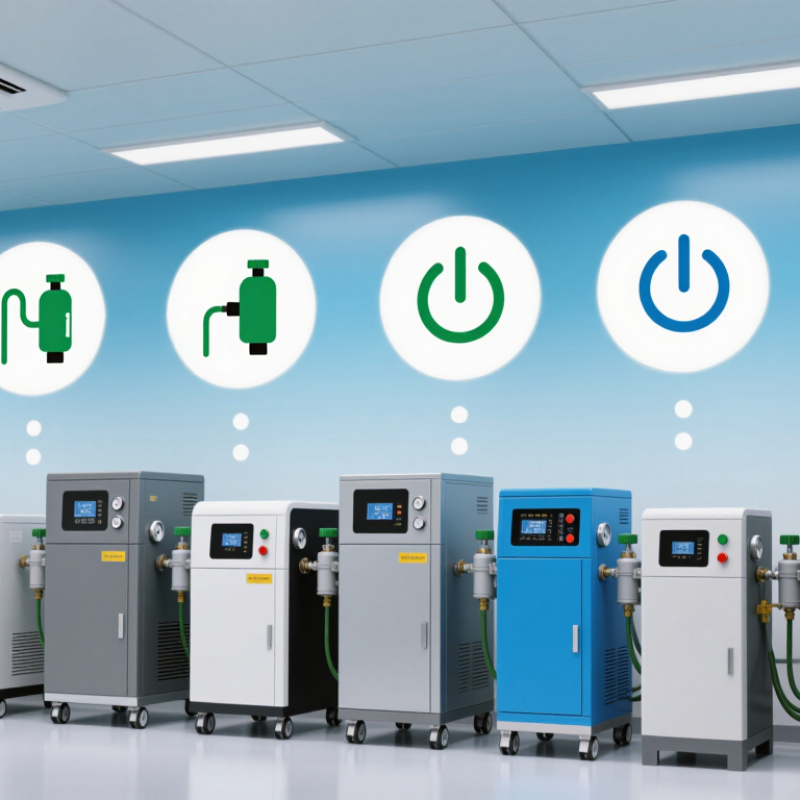
Choosing among the 10 best oxygen generators for hospitals and businesses requires understanding how each system produces oxygen. Pressure Swing Adsorption, or PSA, separates oxygen from compressed air through molecular sieve beds. It suits facilities needing steady, on-site oxygen at moderate flow rates. The beds alternate between adsorption and regeneration. Reliable valves and clean intake air matter greatly. Small errors can reduce purity.
VPSA uses vacuum during regeneration, which can lower operating pressure and improve energy efficiency in larger installations. It often fits hospitals, industrial sites, and centralized medical gas systems with consistent demand. Membrane systems use selective materials to remove part of the nitrogen from air. They are compact and have fewer moving parts. However, their oxygen concentration may be lower, so clinical requirements must be checked carefully. Compact does not mean simple.
Cryogenic systems cool air until its gases separate by boiling points. They can deliver high-purity oxygen and large volumes, but they require complex equipment, trained operators, and careful storage planning. In real facilities, maintenance is sometimes underestimated. Filters clog. Backup cylinders empty sooner than expected. A dependable assessment should examine peak demand, oxygen purity, pressure, noise, power quality, ventilation, and service access. Testing should include alarms and emergency supply changeover, not only normal operation.
Typical Oxygen Purity by Generation Technology
Representative oxygen product purity levels used in hospital and business applications. PSA and VPSA commonly deliver about 90–95% oxygen, membrane systems produce oxygen-enriched air at lower concentrations, and cryogenic separation can provide 99.5% or higher purity.
Values shown are representative reference points within commonly reported operating ranges; actual performance depends on feed-air quality, system design, operating conditions, and required specifications.
Medical-Grade Output: WHO Requires More Than 82% Oxygen Concentration
Hospital oxygen generators must deliver more than airflow. They must provide dependable medical-grade concentration under continuous demand. WHO procurement guidance identifies 82% oxygen as a critical minimum performance threshold for concentrators. Below that level, therapy may become clinically unreliable, especially for patients requiring high-flow support.
The WHO and UNICEF Technical Specifications for Oxygen Concentrators recommend concentration monitoring, low-oxygen alarms, and stable output at the rated flow. A unit marked “10 liters per minute” should be tested at that flow, not only at a lower setting. Real facilities also face voltage fluctuations, dust, heat, and irregular maintenance. These conditions can reduce oxygen purity faster than a brochure suggests.
Check the numbers.
Independent verification matters. ISO 80601-2-69 addresses essential safety and performance requirements for oxygen concentrators, while WHO guidance supports routine testing with calibrated oxygen analyzers. Maintenance records should show inlet-filter replacement, alarm checks, and measured concentration over time. A generator producing 90% oxygen today may fall toward the 82% threshold after heavy use. That change is easy to miss without trend monitoring. This is where many purchasing decisions become imperfect: flow capacity receives attention, but purity stability receives less. Hospitals and businesses should assess oxygen percentage, flow range, noise, power consumption, service access, and backup planning together. WHO data offers a useful baseline, not a substitute for site-specific clinical engineering review.
Ten Best Models Compared by Purity, Flow, Uptime, Energy, and TCO
10 Best Oxygen Generators for Hospitals and Businesses?
Choosing among ten oxygen generator models requires more than checking the highest purity figure. Compare oxygen concentration at the stated flow, not only at laboratory conditions. Hospital systems often need stable output during emergencies, while businesses may prioritize operating cost and simple maintenance. Review uptime records, alarm functions, backup capacity, and service response times. Energy consumption per cubic meter can reveal major differences after several years. Total cost of ownership should include installation, filters, compressors, spare parts, inspections, and expected downtime.
A practical comparison should use verified test data and documented operating conditions. Ask whether purity remains stable during peak demand, high temperatures, and voltage changes. A model delivering 95% oxygen at modest flow may underperform when several beds or processes operate together. Noise and heat also matter in compact technical rooms. I would not trust a ranking based on specifications alone. Field performance can differ. Maintenance history is often more useful than a polished brochure.
Tips: Measure real demand for normal and peak periods. Keep a written log of purity, flow, alarms, and service visits. Request a demonstration under your expected load. Check energy use with a meter, not an estimate. Leave room for ventilation and filter access. A small installation mistake can reduce uptime. Recheck the figures annually, because operating conditions change.
10 Best Oxygen Generators for Hospitals and Businesses? - Ten Best Models Compared by Purity, Flow, Uptime, Energy, and TCO
Comparison is based on common medical-oxygen PSA and VPSA system configurations rather than branded products.
Notes: Medical PSA oxygen is commonly specified at 93% ± 3% oxygen concentration under applicable medical-gas standards. Flow is shown in normal cubic metres per hour (Nm³/h). Availability assumes scheduled maintenance, suitable inlet-air quality, trained operators, and an installed backup supply. Specific energy excludes building HVAC and oxygen distribution losses. Estimated 10-year total cost of ownership includes indicative capital cost, electricity at $0.12/kWh, routine maintenance, consumables, and major service allowances; actual costs vary by country, duty cycle, utility tariffs, installation requirements, and regulatory compliance.