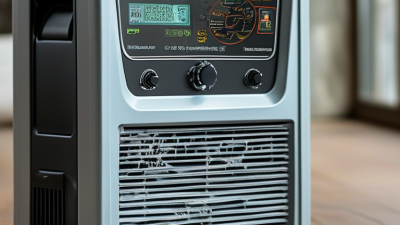
Choosing Sleep Apnea Devices for international markets requires more than comparing prices and product photos. A device that looks suitable online may lack regional certification, dependable after-sales support, or the correct power requirements. Global buyers must examine clinical purpose, user comfort, supplier experience, and product documentation before placing an order. The quiet details matter.
A reliable buying process starts with the patient’s diagnosed condition and the advice of a qualified healthcare professional. Continuous positive airway pressure devices, oral appliances, oxygen equipment, and monitoring tools serve different needs. They should not be treated as interchangeable products. Check pressure ranges, noise levels, mask sizes, humidification options, data tracking, and cleaning requirements. Ask whether replacement parts are available in the destination country. A low purchase price becomes less attractive when a missing seal stops treatment.
Supplier verification also deserves careful attention. Review certificates, test reports, warranty terms, user manuals, and complaint-handling procedures. Confirm that specifications match the shipped model, not merely the product listing. Import rules and electrical standards vary across regions. A knowledgeable supplier should explain these differences clearly, without promising guaranteed medical outcomes. No checklist is perfect. Human comfort, sleep habits, and long-term adherence can change the decision.
These ten buying tips are designed to help distributors, clinics, and individual buyers ask better questions. They combine practical inspection with evidence-based caution. The goal is not to choose the most advanced device. It is to identify a safe, suitable, supportable solution that users can realistically continue using night after night.
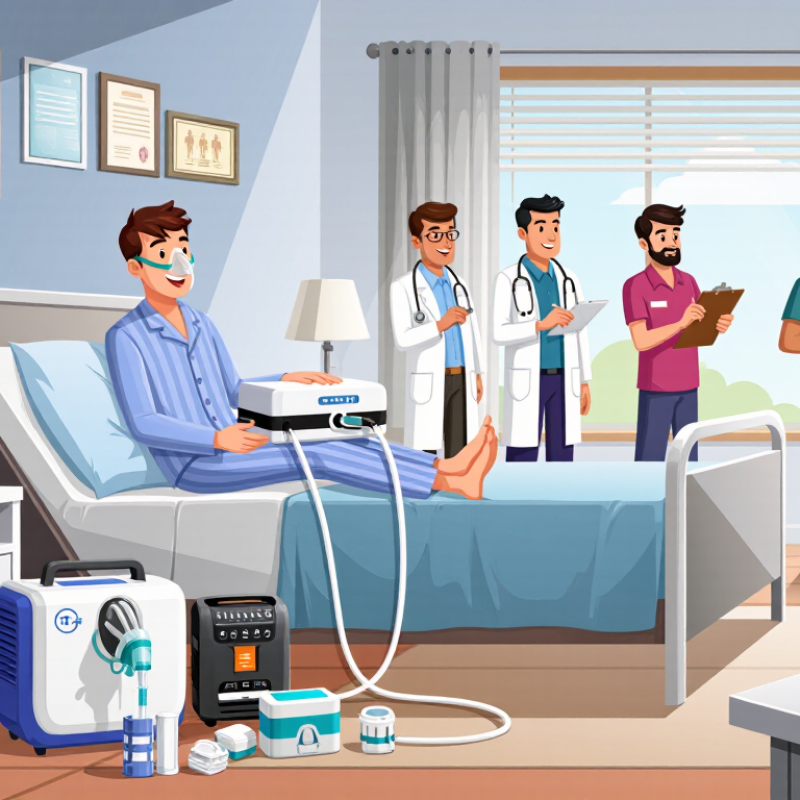
10 Sleep Apnea Devices Buying Tips for Global Buyers
Sleep apnea is more widespread than many buyers realize. A 2019 study in The Lancet Respiratory Medicine estimated that 936 million adults aged 30–69 may have obstructive sleep apnea worldwide. About 425 million may have moderate-to-severe OSA. These are population estimates, not personal diagnoses. Loud snoring, morning headaches, and daytime sleepiness can be warning signs. Yet symptoms vary. Some people notice nothing.
Buying tip: Match the device to clinical evidence, not advertising claims. The American Academy of Sleep Medicine recommends positive airway pressure therapy for many adults with diagnosed OSA, especially when sleepiness affects daily life. A sleep study can help identify severity and breathing patterns. An automatic setting may support comfort, but it cannot replace professional assessment. No device fits everyone.
Global buyers should also inspect certification, electrical compatibility, noise levels, mask options, and replacement-part access. Check whether local clinicians can support setup and follow-up. A device that works in one country may create service problems elsewhere. Do not ignore humidification or data storage; dry air and poor monitoring can reduce regular use. One practical lesson is easy to miss: the cheapest unit may cost more later. Specifications look precise. Real comfort is harder to measure.
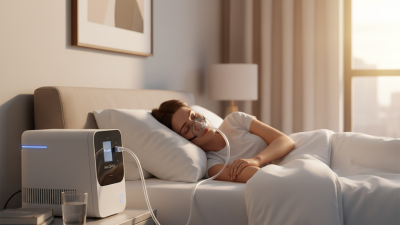
Sleep apnea devices should be classified by clinical need, not by price or appearance. The Lancet Respiratory Medicine estimated that 936 million adults aged 30–69 may have mild-to-severe obstructive sleep apnea worldwide. About 425 million may have moderate-to-severe disease. These figures show why a “one device fits all” buying approach can fail.
CPAP delivers one steady pressure and suits many patients with confirmed obstructive sleep apnea. APAP changes pressure during sleep, which may help when pressure needs vary by position or sleep stage. BiPAP provides separate inhalation and exhalation pressures. It may be considered when higher pressures, breathing disorders, or CPAP intolerance require specialist assessment. The American Academy of Sleep Medicine recommends positive airway pressure based on clinical evaluation and objective testing, not casual self-selection.
Masks matter as much as the machine. A nasal mask may feel lighter, while a full-face mask can help users who breathe through the mouth. Oral appliances can suit selected adults with mild-to-moderate disease or those unable to tolerate PAP. The AASM and AADSM guideline advises dentist-led fitting and follow-up. Fit is practical. A leaking mask at 3 a.m. is not a minor detail.
Global buyers should check local voltage, replacement schedules, humidifier compatibility, and after-sales servicing. A confusing point remains: comfort claims are difficult to compare across countries and sleep laboratories. Request documented testing, pressure ranges, noise data, and clinician guidance before ordering.
| Tip | Device Class | Best-Matched Need | Typical Characteristics | What Global Buyers Should Check | Important Caution |
|---|---|---|---|---|---|
| 1 | CPAP Fixed pressure | Adults with obstructive sleep apnea who need a consistent therapeutic pressure. | Delivers one prescribed pressure throughout inhalation and exhalation. Pressure is commonly expressed in cmH2O. | Confirm the adjustable pressure range, ramp function, humidifier compatibility, data recording, and compliance with the destination market’s electrical requirements. | Pressure should be selected or adjusted according to a qualified clinician’s prescription or treatment plan. |
| 2 | APAP Auto-adjusting | Users whose pressure needs vary with sleep position, sleep stage, nasal congestion, or other night-to-night factors. | Automatically adjusts pressure within a prescribed minimum and maximum range, often using airflow-related signals. | Check the minimum and maximum pressure settings, event detection features, data access, algorithm documentation, and availability of clinical configuration tools. | Automatic adjustment does not replace diagnosis, follow-up, or professional review of treatment data. |
| 3 | BiPAP Two pressure levels | Patients who require different inspiratory and expiratory pressures, including some users with higher pressure needs or specific breathing disorders. | Provides separate inspiratory positive airway pressure and expiratory positive airway pressure; the pressure difference is commonly called pressure support. | Verify the available modes, pressure limits, backup-rate options where applicable, alarm functions, battery performance, and clinical support requirements. | BiPAP is not automatically better than CPAP or APAP and generally requires more specific clinical assessment. |
| 4 | Oral Appliance Mandibular advancement | Selected adults with mild to moderate obstructive sleep apnea, or people who cannot tolerate positive airway pressure therapy. | A custom device can reposition the lower jaw or tongue to help maintain upper-airway space during sleep. Titration may be gradual. | Prefer clinician-supervised, custom-fitted and titratable designs; check material safety, adjustment range, replacement parts, and dental follow-up access. | Suitability depends on dental health, jaw function, anatomy, and treatment evaluation; effectiveness should be confirmed by follow-up testing when clinically indicated. |
| 5 | Nasal Mask Nose coverage | Users who primarily breathe through the nose and want a balance between coverage and freedom of movement. | Covers the nose and seals around the nasal bridge and sides of the nose. It is generally less bulky than a full-face mask. | Compare cushion sizes, headgear adjustment, forehead support, vent design, replacement intervals, and compatibility with the selected PAP device. | Persistent mouth breathing or significant nasal obstruction may reduce comfort and treatment effectiveness. |
| 6 | Nasal Pillows Minimal contact | Users who prefer a lightweight interface, have facial hair, or feel confined by larger masks. | Uses small cushions that rest at the nostril openings. It usually provides a wide field of vision and minimal facial coverage. | Check available pillow sizes, seal stability, hose position, noise level, skin-contact materials, and whether higher prescribed pressures remain comfortable. | Nasal pillows may be unsuitable for some users with nasal obstruction, frequent mouth opening, or poor tolerance of airflow at the nostrils. |
| 7 | Full-Face Mask Nose and mouth | Users who breathe through the mouth, have persistent nasal congestion, or need a mask covering both the nose and mouth. | Seals over the nose and mouth and can maintain therapy when inhalation occurs through either route. | Assess facial size options, cushion design, leak-management features, quick-release mechanisms, humidification compatibility, and access to replacement cushions. | A larger contact area can increase bulk, facial pressure, or leak risk; correct sizing and fitting are essential. |
| 8 | Any PAP Device Travel and power | International travelers, mobile workers, and buyers in regions with unstable or different electrical power systems. | Portable PAP systems may support universal input voltage, external batteries, vehicle power, or compact travel operation, depending on the model. | Confirm input voltage and frequency, plug or adapter requirements, battery runtime, airline transport guidance, altitude limits, local service, and spare-part availability. | Never assume a travel adapter changes voltage; verify the device’s rated input and use approved power accessories. |
| 9 | Any Device Data and connectivity | Buyers who need treatment monitoring, remote follow-up, fleet management, or documented adherence information. | Data may be stored locally or transmitted through wireless connectivity, depending on the device and regional network support. | Check data fields, export formats, software access, language support, cellular-band compatibility, privacy controls, cybersecurity documentation, and offline operation. | Connectivity features may vary by country and may require consent, network coverage, or compliance with local privacy regulations. |
| 10 | Any Device Regulatory and after-sales | Importers, distributors, healthcare providers, and institutional buyers requiring dependable long-term supply. | Regulatory status, labeling, instructions for use, warranty, maintenance, consumables, and technical support directly affect total ownership cost. | Request applicable market authorization, electrical and biocompatibility documentation, multilingual manuals, warranty terms, service response times, consumable lead times, and product traceability. | Regulatory acceptance differs by destination; confirm requirements with the relevant authority before import or commercial distribution. |
Note: Device selection should be based on a confirmed diagnosis, individual clinical needs, proper fitting, and qualified medical guidance. Pressure settings and treatment modes should not be changed without professional direction.
10 Sleep Apnea Devices Buying Tips for Global Buyers
Moderate-to-severe obstructive sleep apnea needs more than a quiet bedroom. AASM clinical guidance recommends positive airway pressure therapy for adults with diagnosed OSA, especially when symptoms or hypertension are present. The 2019 Lancet Respiratory Medicine analysis estimated that 425 million adults worldwide may have moderate-to-severe OSA. The market is large, but purchasing decisions still require clinical discipline.
Compare measured performance, not advertising language. Review residual AHI, leak rate, pressure response, noise output, humidification, and data visibility. A device showing nightly trends can help clinicians adjust therapy. However, its reported AHI is not equal to laboratory polysomnography. That difference matters. AASM guidance supports CPAP or auto-adjusting PAP in appropriate patients, but the best mode depends on diagnosis, comfort, pressure needs, and comorbidities. Buyers should request independent validation, test conditions, and accuracy ranges before comparing models.
Check practical details across countries. Confirm voltage compatibility, electrical certification, warranty coverage, replacement filters, mask availability, and service training. A 2023 American Thoracic Society workshop report emphasized adherence barriers, including discomfort, leaks, dryness, and device complexity. A technically strong device may still fail beside a hotel bed if its mask seal breaks repeatedly. Global buyers should also ask whether clinicians can access usable therapy data remotely or through secure downloads. Some purchasing checklists miss this point. They should not.
The apnea-hypopnea index (AHI) is commonly used to classify obstructive sleep apnea (OSA): mild OSA is 5–14 events per hour, moderate OSA is 15–29 events per hour, and severe OSA is 30 or more events per hour. The American Academy of Sleep Medicine recommends positive airway pressure (PAP) therapy for adults with moderate-to-severe OSA, while treatment for mild OSA should be individualized with a qualified healthcare professional.
Sleep apnea demand is substantial: an estimated 936 million adults aged 30–69 have mild-to-severe obstructive sleep apnea worldwide, according to a 2019 Lancet Respiratory Medicine analysis. That scale makes compliance checks essential, not decorative paperwork. For each device, verify the exact model, intended use, and market authorization. FDA clearance applies to a specific product and indication. It does not automatically cover accessories, software, or private-label versions.
Check the FDA public database and request the clearance number, labeling, and manufacturing details. For Europe, confirm CE marking under the Medical Device Regulation (EU) 2017/745. The declaration should identify the notified body when required. Examine clinical evaluation, post-market surveillance, vigilance procedures, and the authorized representative. A CE logo alone proves very little. It can be copied.
ISO 13485 certification shows that the manufacturer operates a medical-device quality system. It is not product approval. Ask for a current certificate, issuing body, scope, and expiration date. IEC 60601 test reports should cover electrical safety and electromagnetic compatibility for the actual configuration. Battery packs, humidifiers, chargers, and wireless modules may need separate assessment. Review leakage current, alarm performance, materials, and cleaning instructions. Paperwork can still contain gaps. A careful buyer should compare every certificate number with the issuing organization’s online records. The FDA’s annual registration and listing datasets can also reveal inconsistencies, although listing does not equal clearance.
References: FDA CDRH registration and listing resources; ISO 13485:2016; IEC 60601-1; Benjafield et al., The Lancet Respiratory Medicine, 2019.
For global buyers, the purchase price is only the visible part of a sleep apnea device. A 2019 analysis in The Lancet Respiratory Medicine estimated that 936 million adults aged 30–69 have mild-to-severe obstructive sleep apnea worldwide. Demand is large, but support quality differs sharply between markets.
Ask for the full three-year cost. Include the device, mask, tubing, filters, batteries, software access, shipping, taxes, and replacement parts. Consumables may need regular replacement, especially in hot or dusty environments. A warranty should state repair times, excluded damage, and who pays return freight. Two years sounds reassuring. It may not be enough.
Check whether local technicians can inspect pressure accuracy and electrical safety. Confirm that replacement parts are stocked locally, not shipped from another continent. Data also needs attention. The American Academy of Sleep Medicine’s 2019 clinical practice guideline supports positive airway pressure therapy for appropriate patients, but treatment decisions still require clinical assessment. Ask whether usage data can be exported in a readable format, securely transferred, and reviewed by authorized professionals.
A spreadsheet can still lie. Exchange rates change. Import delays happen. I would request written service-level commitments and one sample consumables schedule before ordering. The cheapest device may become expensive after one missed shipment or an unavailable mask. Good support is not decoration. It is part of treatment reliability.